 ShaadiTemplate
Designs › Wedding (Vivah) › Raj Mahel Lantern Kankotri
Raj Mahel Lantern Kankotri: nine-page painted Gujarati kankotri
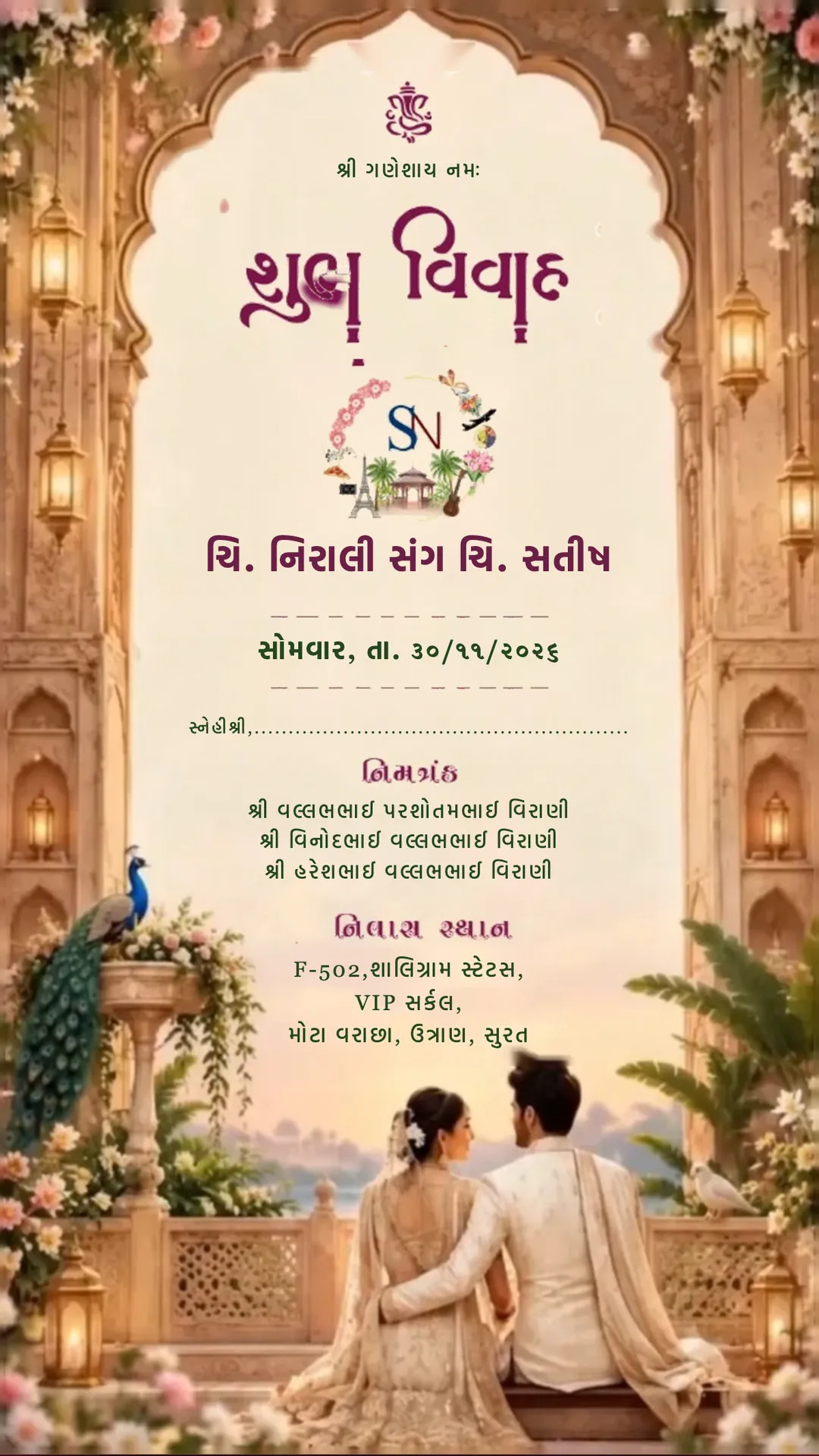
- Ceremony: Wedding (Vivah)
- Language: Gujarati
- God or sacred symbol: Lord Ganesha
- Format: WhatsApp image (1080 x 1920 px) and 5 x 7 inch print PDF
- Pages: 9 (cover, letter, carnival, sangeet, mandap muhurat, jaan arrival, family elders, cousins, closing request)
About this design
Raj Mahel is the longest kankotri on ShaadiTemplate: nine painted pages, one for every part of a Gujarati wedding, copied from a printed family set. The cover sets the tone with a couple seated on a sandstone palace balcony, seen from behind, under a cusped arch hung with brass lanterns, a peacock on the railing and hills in the evening haze. A small Ganesha, the શુભ વિવાહ title and the couple's monogram are lifted from the original artwork, so they keep its calligraphy.
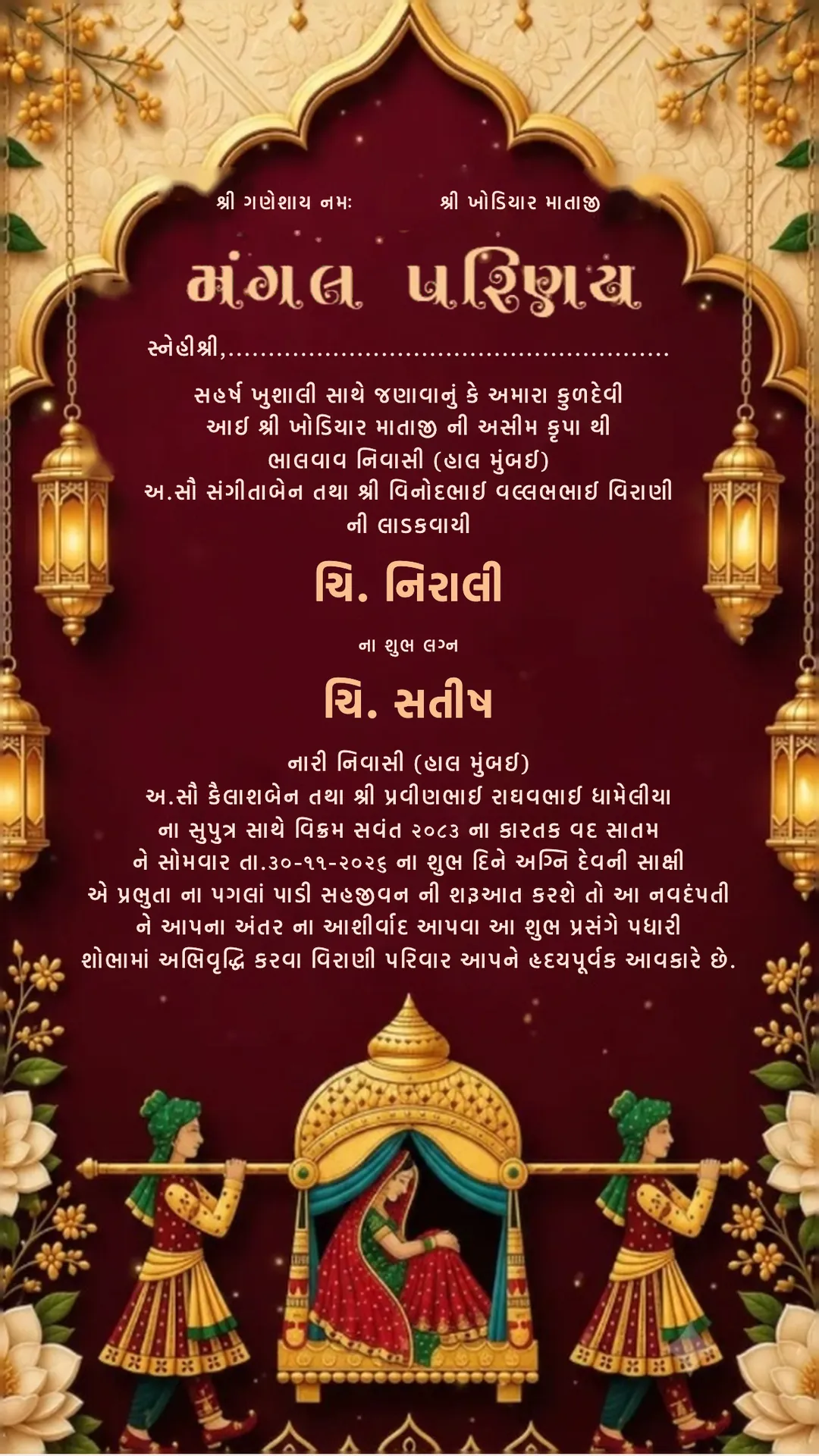
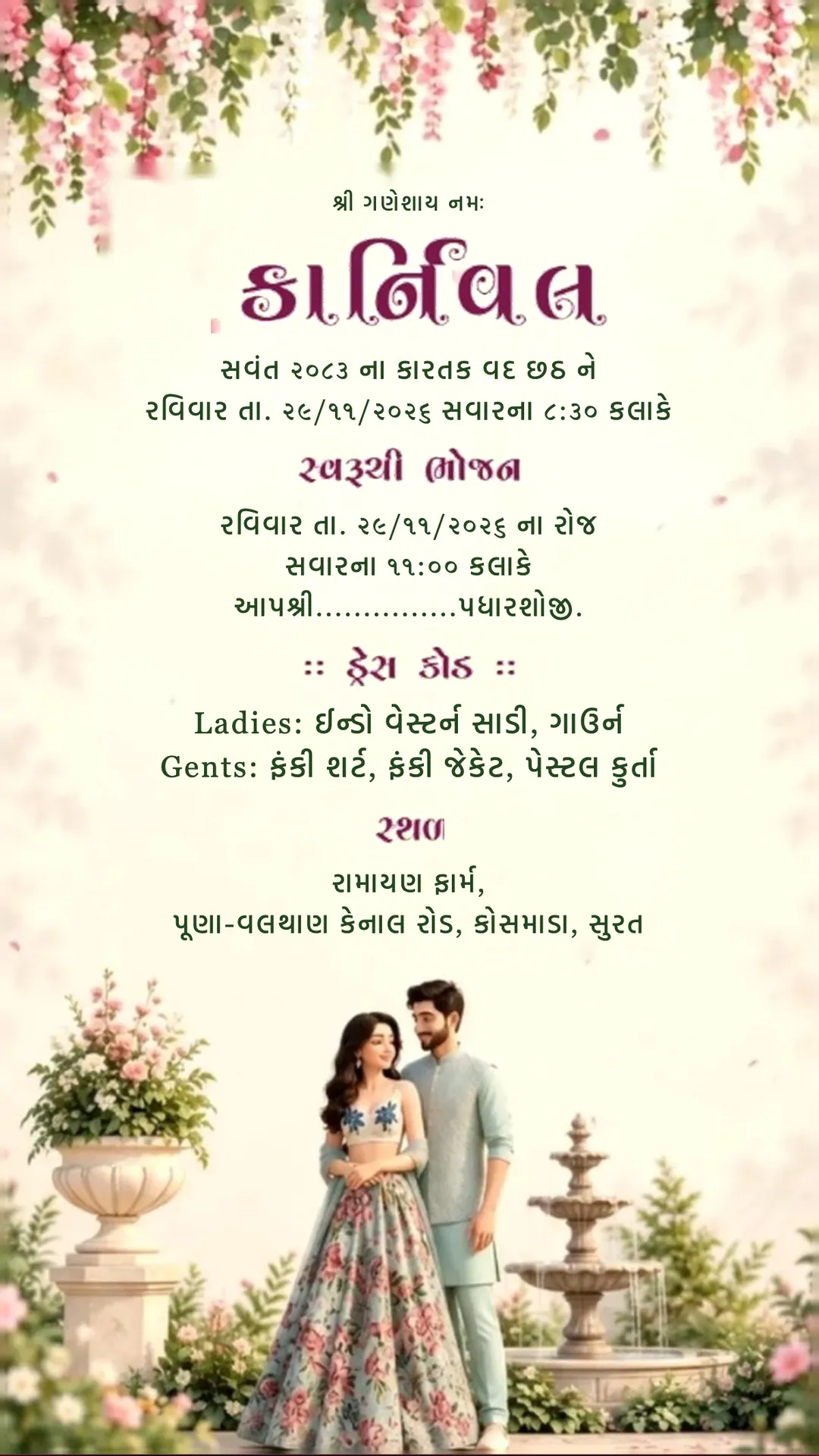
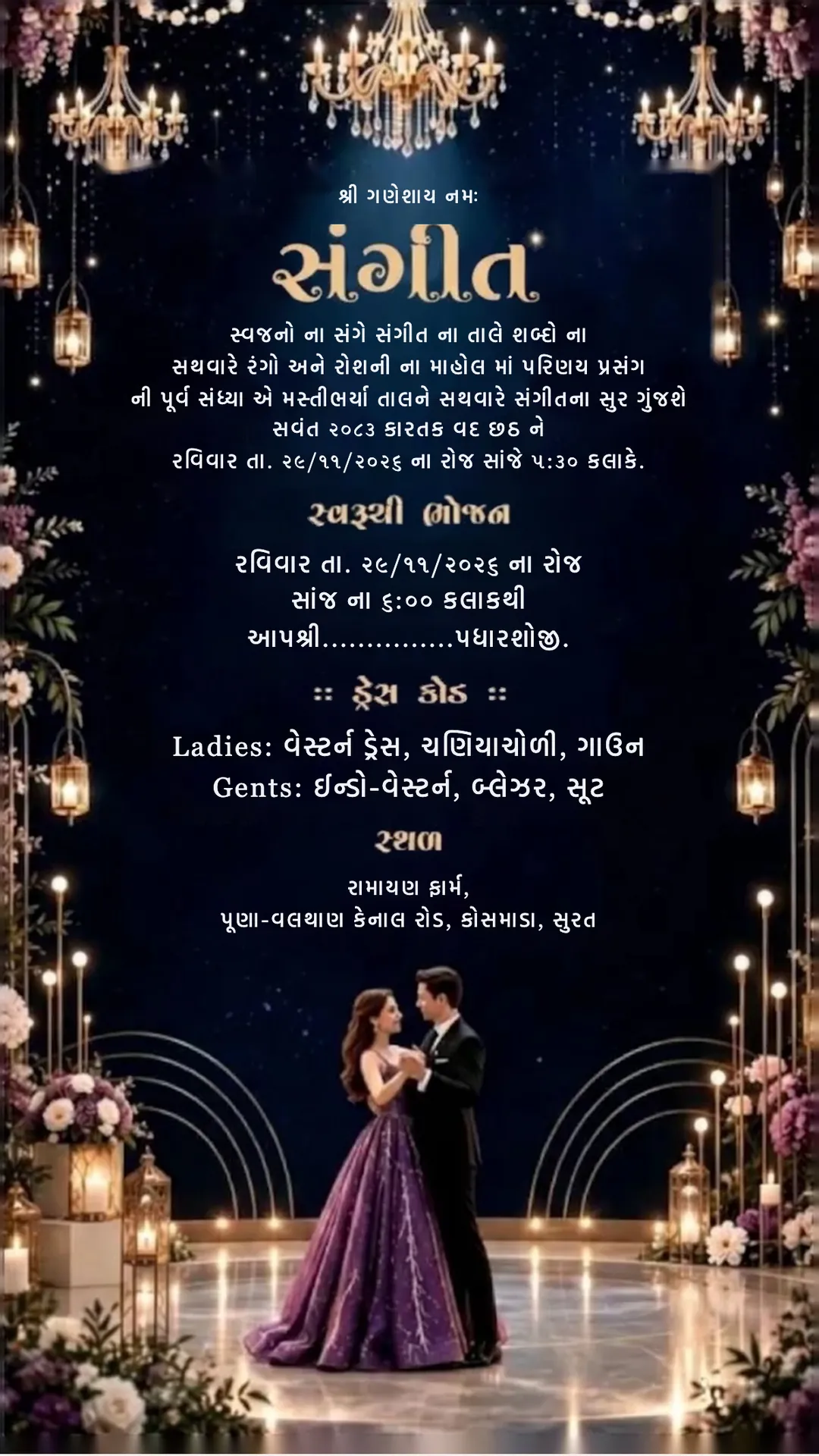
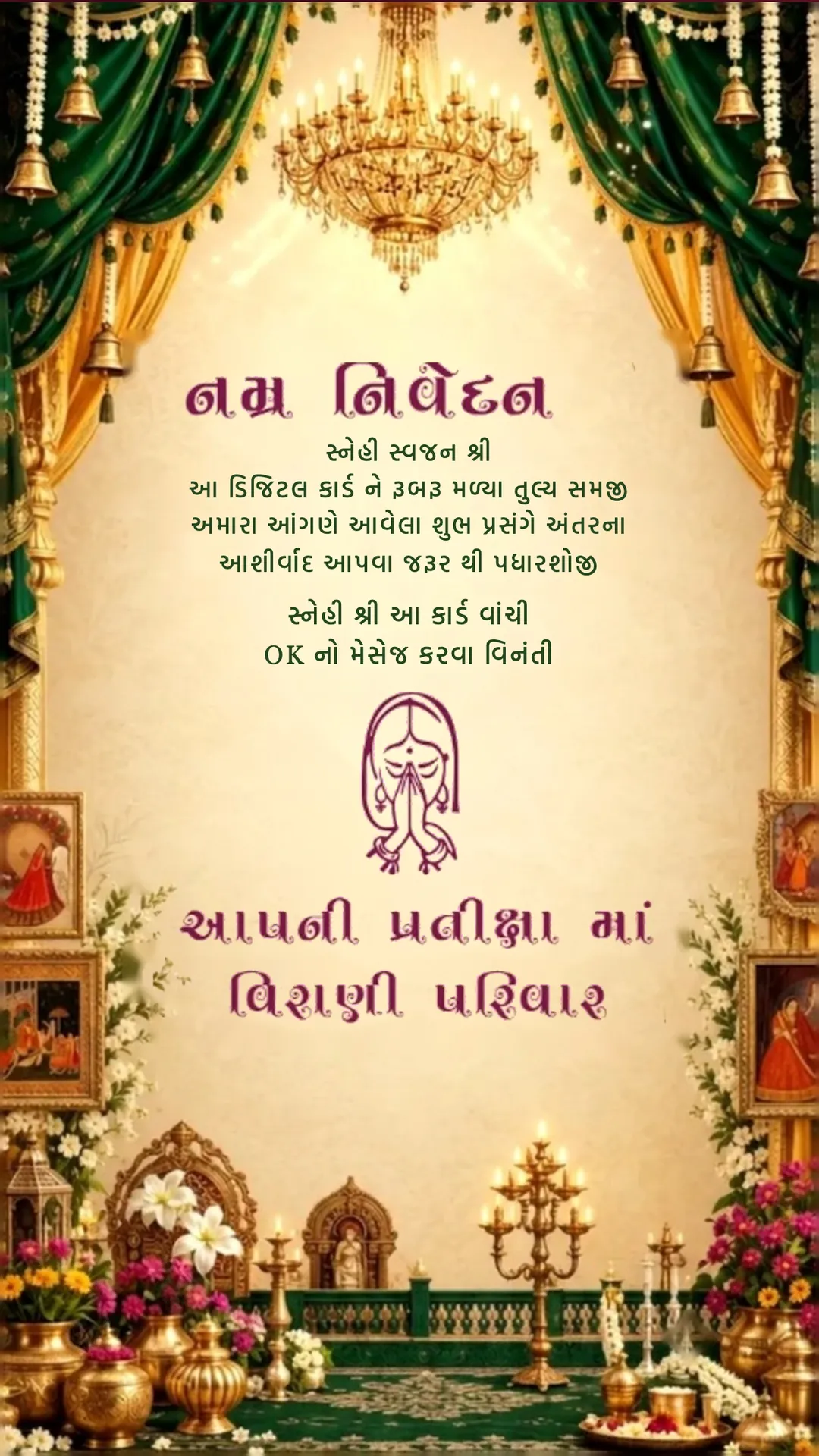
Every page after that is its own scene. The letter page is a deep maroon arch with a painted doli carried by two bearers. The carnival page shows the couple in a garden by a fountain, the sangeet page a ballroom in midnight blue with chandeliers, and the mandap muhurat page a bride and groom seated before the sacred fire. The jaan page opens onto a palace and a floral mandap, the elders' page is framed by pillars, jasmine garlands and banana leaves, the cousins' page is a red arch with elephants, and the closing page has a chandelier, green drapes and kalash lamps.
The page headings (દિવ્ય આશિષ, આગમન ના અભિલાષી, પરિવાર ના પુષ્પો and the dress-code lines) are cut from the painted card too. The text you edit is set in Hind Vadodara in plum and green, switching to cream on the three dark pages. It suits Gujarati Hindu families who want every function on its own page and plan to share the card on WhatsApp, where each painting fills the screen.
All 9 pages
The cover is shown above. These are the other pages exactly as the card opens in the editor, with the sample family names.
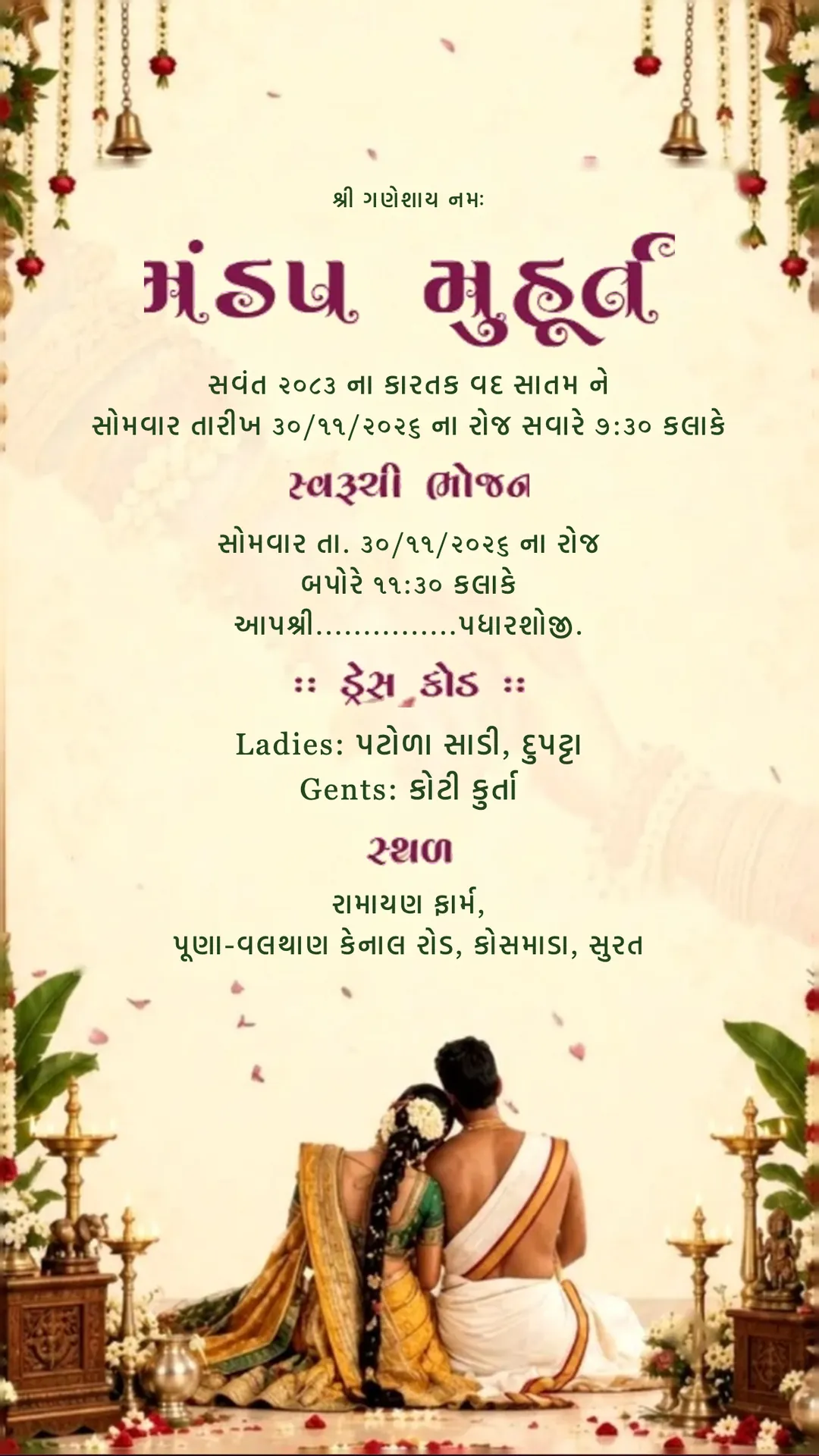
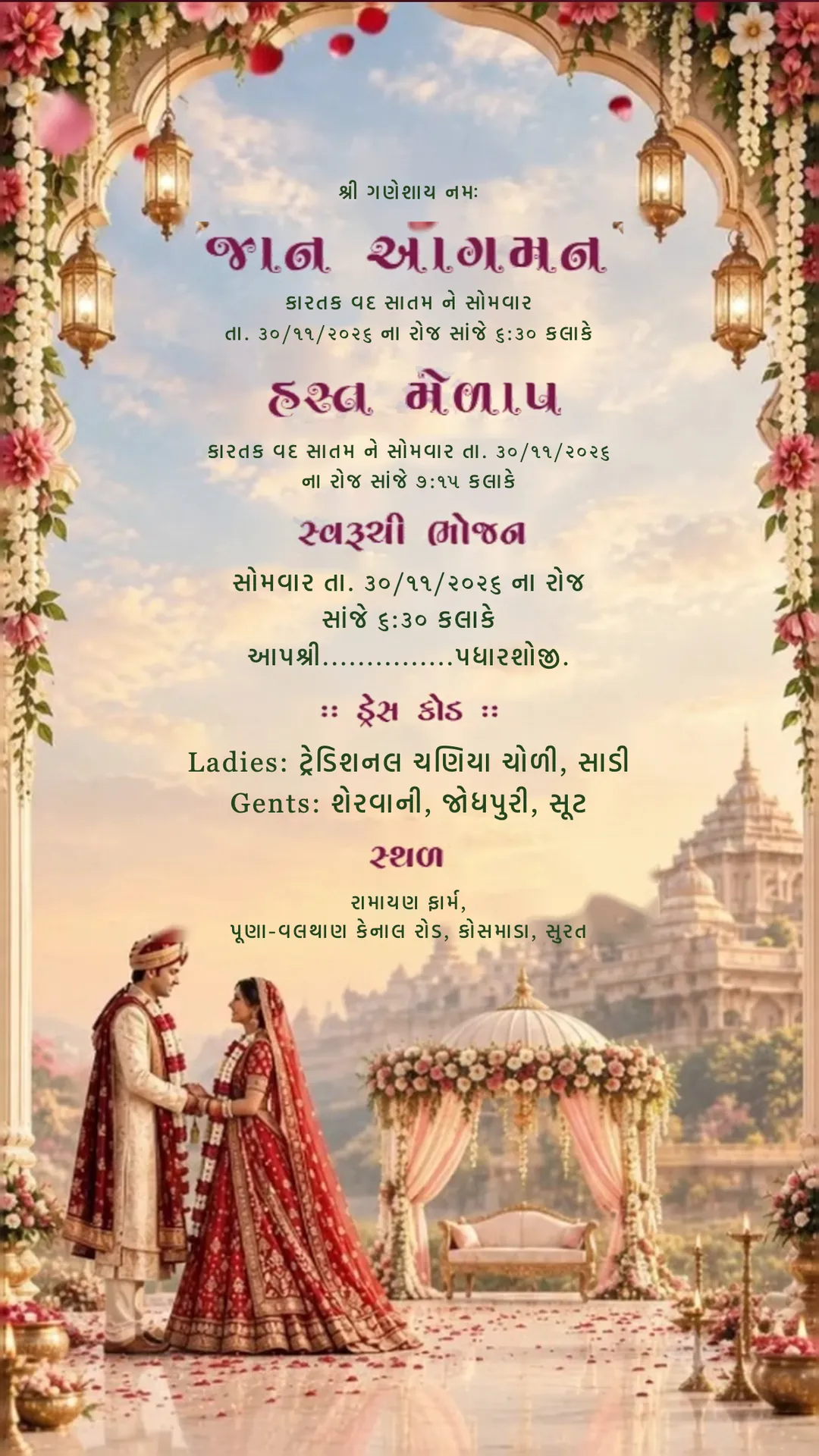
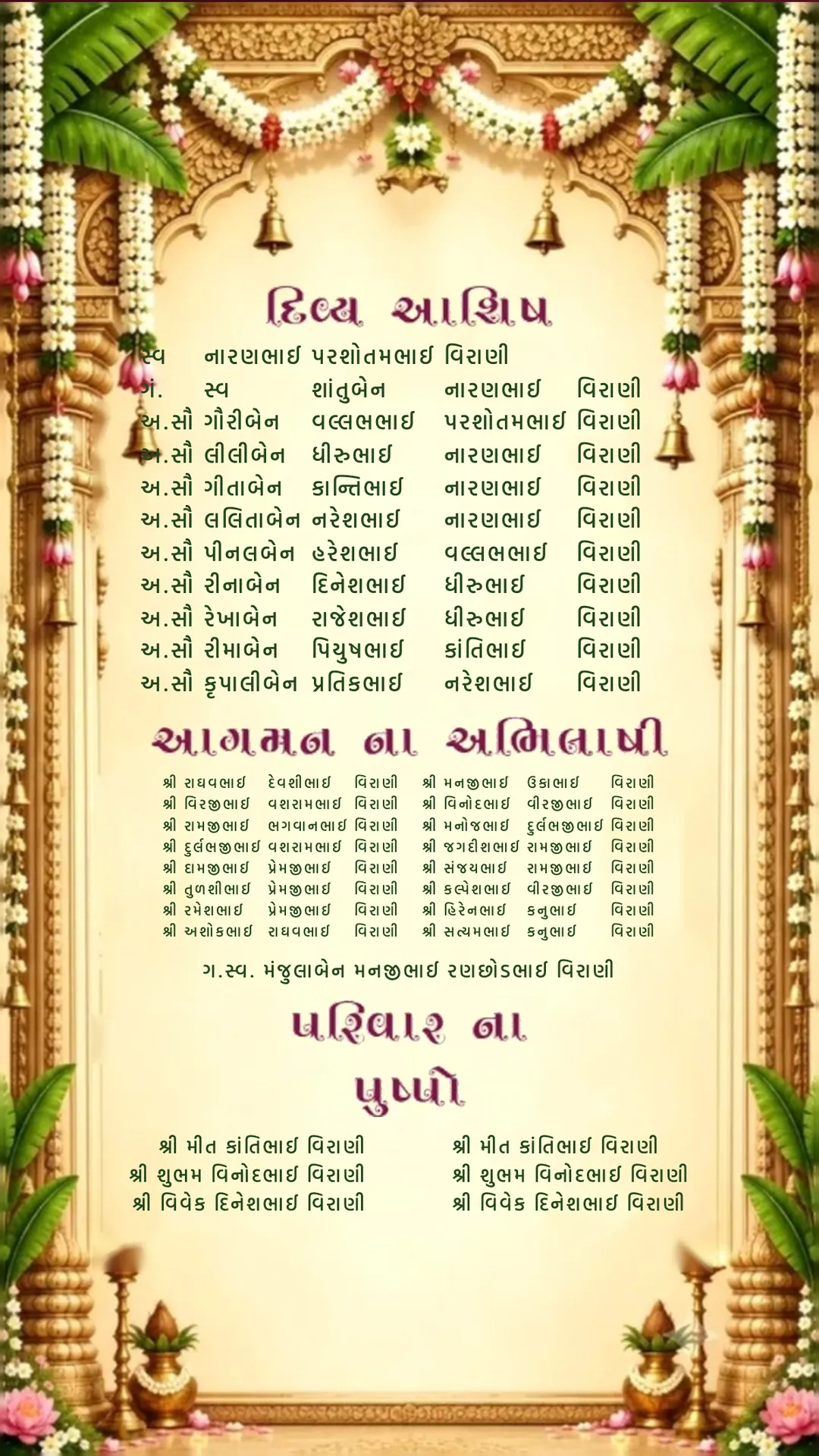
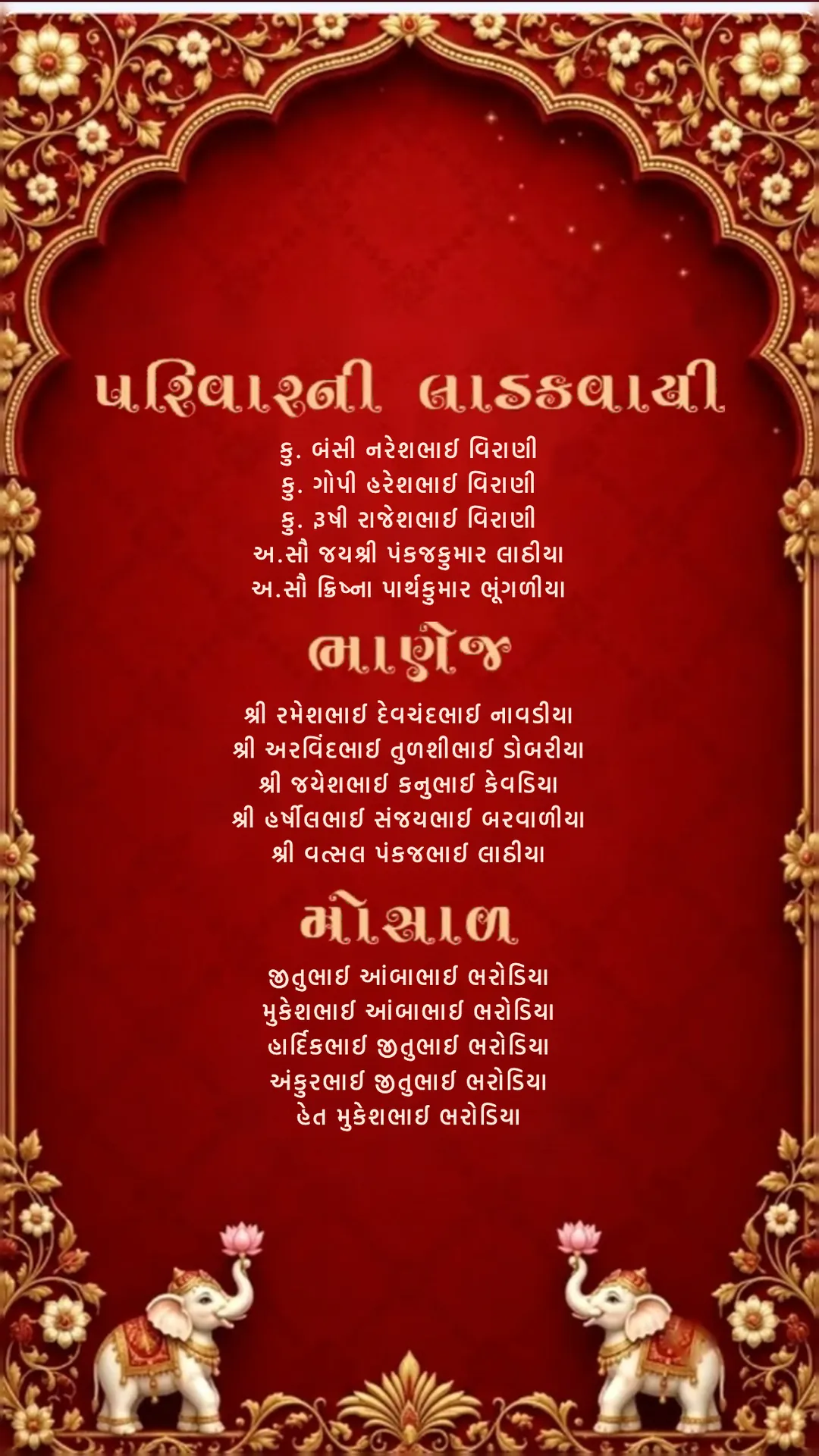
Sample wording on this card
The sample is written the way the printed kankotri was. The cover opens with a small Ganesha and શ્રી ગણેશાય નમઃ, then the couple's names joined by સંગ, the date in the Gujarati numerals, a blank line for the guest's name after સ્નેહીશ્રી, the નિમંત્રક (hosts) and the family's નિવાસ સ્થાન (home address).
The letter on page 2 names the family's kuldevi, gives the date in Vikram Samvat with the tithi as well as the English calendar, and closes with the family welcoming guests to bless the couple. Pages 3 to 6 each give one function with its date, time, venue and a dress code for ladies and gents. Pages 7 and 8 list the elders, the આગમન ના અભિલાષી (relatives awaiting your arrival), the younger cousins, the ભાણેજ and the મોસાળ પક્ષ. The last page is a નમ્ર નિવેદન, a polite request to guests. Replace every name, date and address with your own before you share it.